



BABANGIDA’s LAMENTATION: “ IF I HAVE TO DO IT AGAIN, I WILL DO IT DIFFERENTLY REFLECTION ON ANNULLED JUNE12 ELECTION
Almost 32 years after the annulment of the June 12, 1993, presidential election—widely regarded as the freest and fairest poll in Nigeria’s history—the former military president, General Ibrahim Babangida (rtd.), has finally acknowledged that the Social Democratic Party (SDP) candidate, Chief Moshood Kashimawo Olawale (MKO) Abiola, won the election.
This revelation is contained in Babangida’s 420-page memoir, A Journey in Service: An Autobiography of Ibrahim Babangida, launched in Abuja with esteemed national and continental dignitaries in attendance. The book review was conducted by former Vice President, Prof. Yemi Osinbajo, who noted that Babangida—often referred to as the “evil genius” and “Maradona” for his political maneuvering—directly addressed the long-standing question of Abiola’s electoral victory.
Acknowledging the Truth
Babangida writes in his book: ‘Although I am on record to have stated after the election that Abiola may not have won, upon further reflection and a closer examination of all available facts, particularly the detailed election results published as an appendix to this book, there was no doubt that MKO Abiola won the June 12 elections.’
The former leader further elaborates: ‘Upon closer examination of the original collated figures from the 110 polling booths nationwide, it was clear that he satisfied the two main requirements for winning the presidential election—majority votes and geographical spread—having obtained 8,128,720 votes against Tofa’s 5,848,247 votes, securing the mandatory one-third of the votes cast in 28 states of the Federation, including Abuja.’
 |
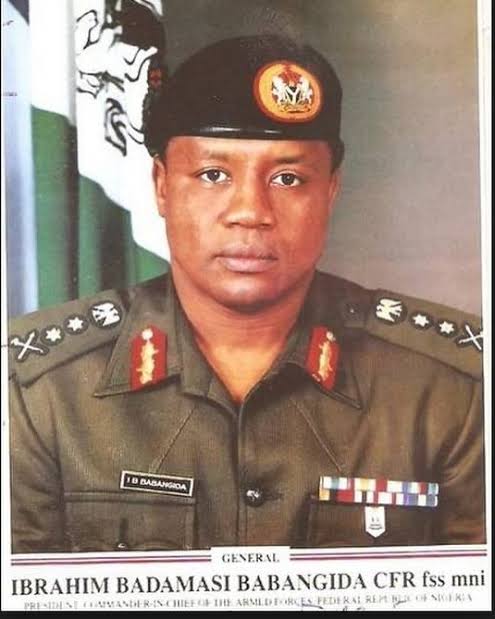
| General Ibrahim Gbadamosi Babangida |
Babangida, who turned 83 on August 27, 2024, expressed deep regret over the annulment, describing that period as the most difficult of his life.
A Painful Decision and Regret
Reflecting on the annulment, Babangida stated at the book launch: ‘However, the tragic irony of history remains that the administration that devised a near-perfect electoral system and conducted those near-perfect elections could not complete the process.’
He continued: ‘That accident of history is most regrettable. The nation is entitled to expect my impression of regret. As a leader of the military administration, I accept full responsibility for all decisions taken under my watch.’
The annulment of the June 12 election disrupted Nigeria’s democratic transition. The world awaited Abiola’s formal declaration as the elected president when Babangida’s regime nullified the election, citing alleged irregularities. However, by June 14, 1993, the National Electoral Commission (NEC) had already announced partial results, showing Abiola had won 19 out of 30 states, including the Federal Capital Territory (FCT). He achieved broad support across Nigeria’s ethno-religious divides, including victories in the Southwest, parts of the Southeast, and the North, even defeating his opponent, Alhaji Bashir Tofa, in Kano—Tofa’s home state.
In his book, Babangida recounts the challenges of his administration, saying: ‘And June 12 happened under my watch. Mistakes, oversights, and missteps happened in quick succession, but I say in my book, in all matters, we acted in the supreme national interest so that Nigeria could survive.’
He acknowledged that the annulment sparked nationwide protests and political unrest, ultimately forcing his resignation and prolonging Nigeria’s struggle for democracy, which eventually culminated in the return to civilian rule in 1999.
Prof. Yemi Osinbajo, while reviewing the book, echoed Babangida’s admission, quoting a significant passage: ‘June 12 election was the most challenging of my life. If I had to do it all over again, I would do it differently.’
Beyond the June 12 saga, A Journey in Service delves into other key historical events, including the 1976 coup that led to the assassination of then-Head of State, Murtala Muhammed, and the 1986 letter bomb assassination of investigative journalist Dele Giwa.
Babangida’s acknowledgment of Abiola’s victory, though belated, reopens discussions on the consequences of the annulment and its lasting impact on Nigeria’s democratic journey. The June 12 crisis remains a pivotal moment in the country’s history, symbolizing both the resilience of democratic aspirations and the painful scars of political miscalculations.
His memoir serves as a testament to Nigeria’s turbulent past and offers insights into the delicate balance between power, governance, and the national interest. Babangida’s reflections provide a rare glimpse into the mind of a leader whose decisions shaped—and in many ways, altered—the course of Nigerian democracy forever.



